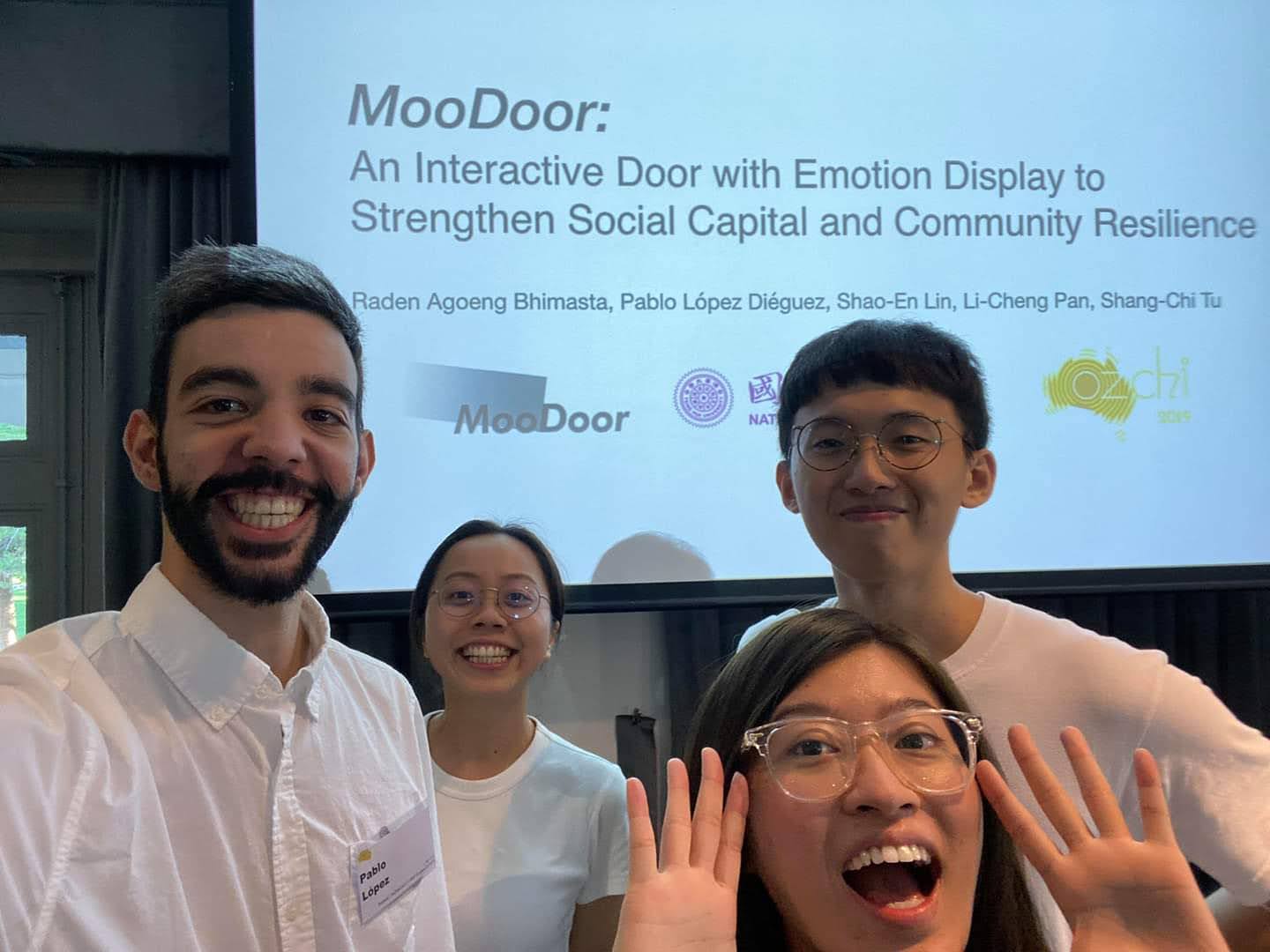
MooDoor: Interactive Door Displays for Community Resilience
Conference (OzCHI 2019) ↗Slides ↗Poster ↗Design challenge (Medium) ↗
A 24-hour challenge
In 2019, our team at National Tsing Hua University took part in the OzCHI student design challenge. We had 24 hours to explore how smart city technology could help build connections between neighbors and make communities more resilient. Our team brought together people from service design, HCI, and computer science, working across Taiwan and Indonesia.
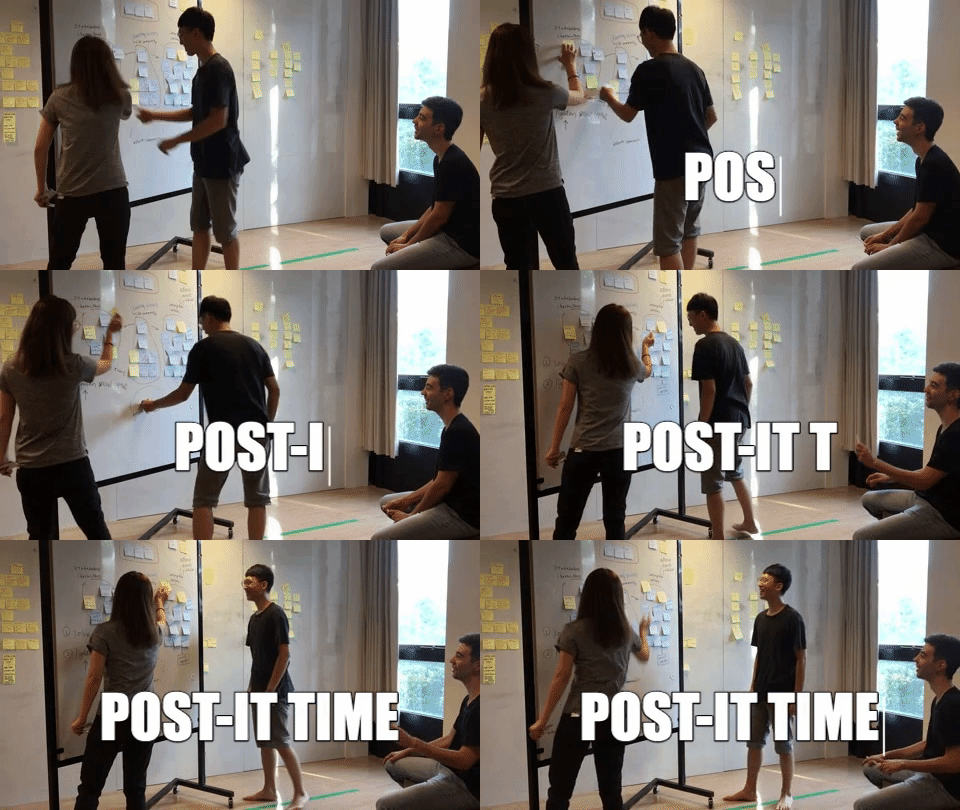
We started by reading and discussing research, covering the room in notes, and narrowing down ideas. We chose to focus on earthquakes, an experience familiar to people in both Taiwan and Indonesia.
The idea
We proposed MooDoor: a residential door with a display that could help neighbors communicate. In everyday use, a resident could choose colors, patterns, or icons to share their mood or interests. For example, a birthday icon might give a neighbor a reason to say hello.
We also imagined an emergency mode for earthquakes. Residents could indicate that they were safe, while alerts could help neighbors and emergency services identify people who might need assistance.
What came out of it
We developed the concept, made a prototype and storyboard, and documented our work during the challenge. We later presented the project at OzCHI 2019. The paper, slides, poster, and our design notes are linked above.
MooDoor was a design proposal, not a tested disaster response system. Our discussion also raised questions about privacy and whether people without access to the technology could be left behind in an emergency.